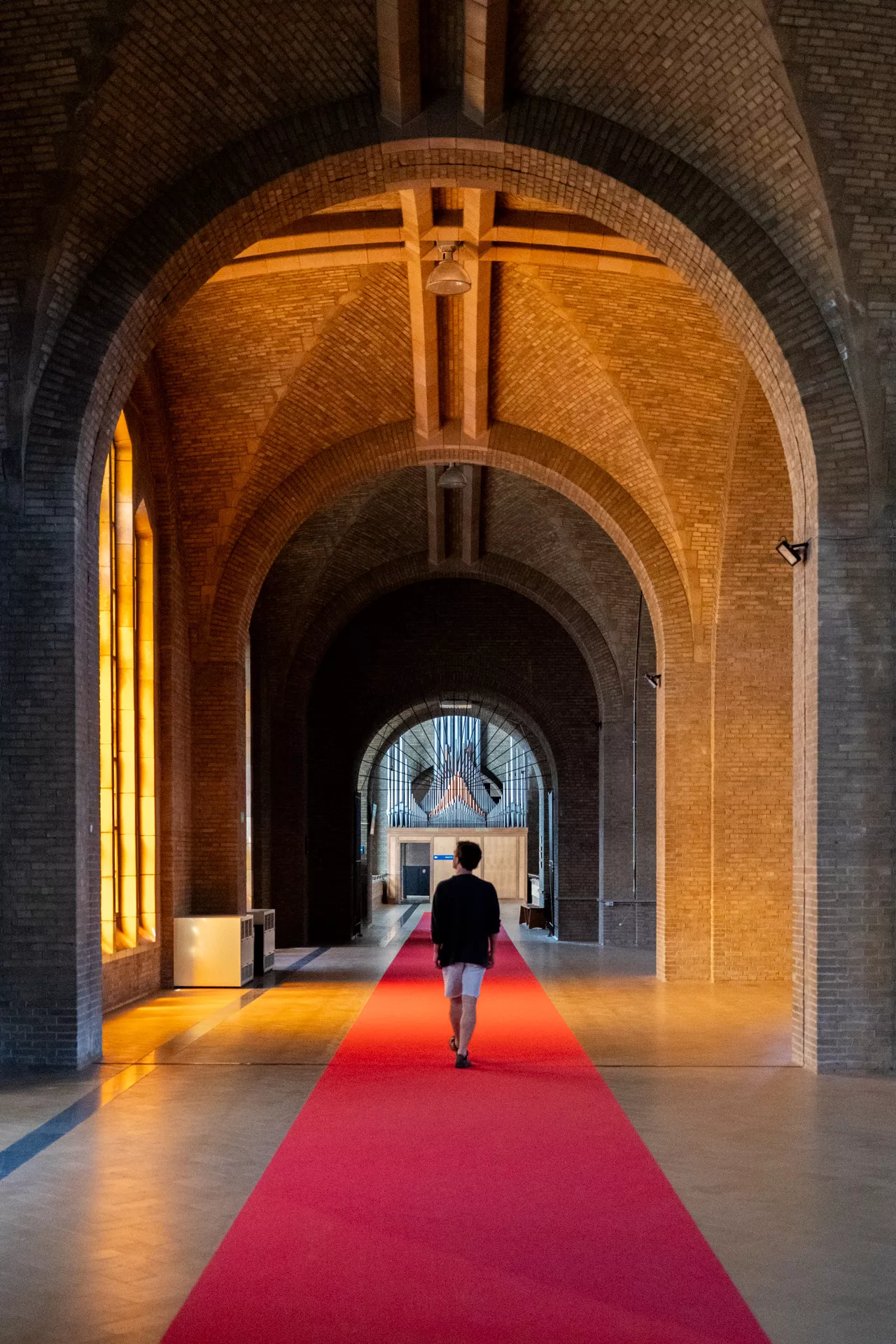
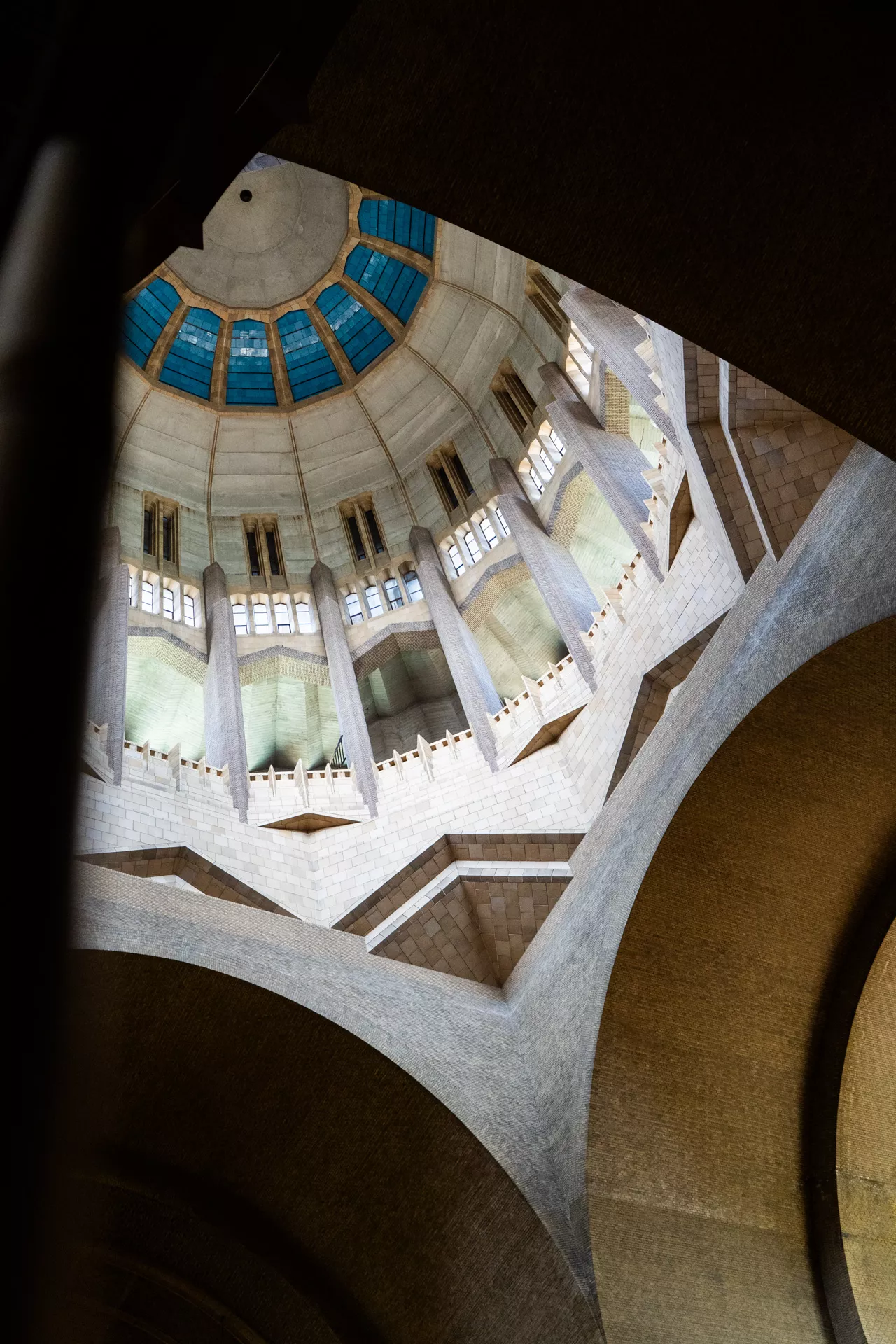
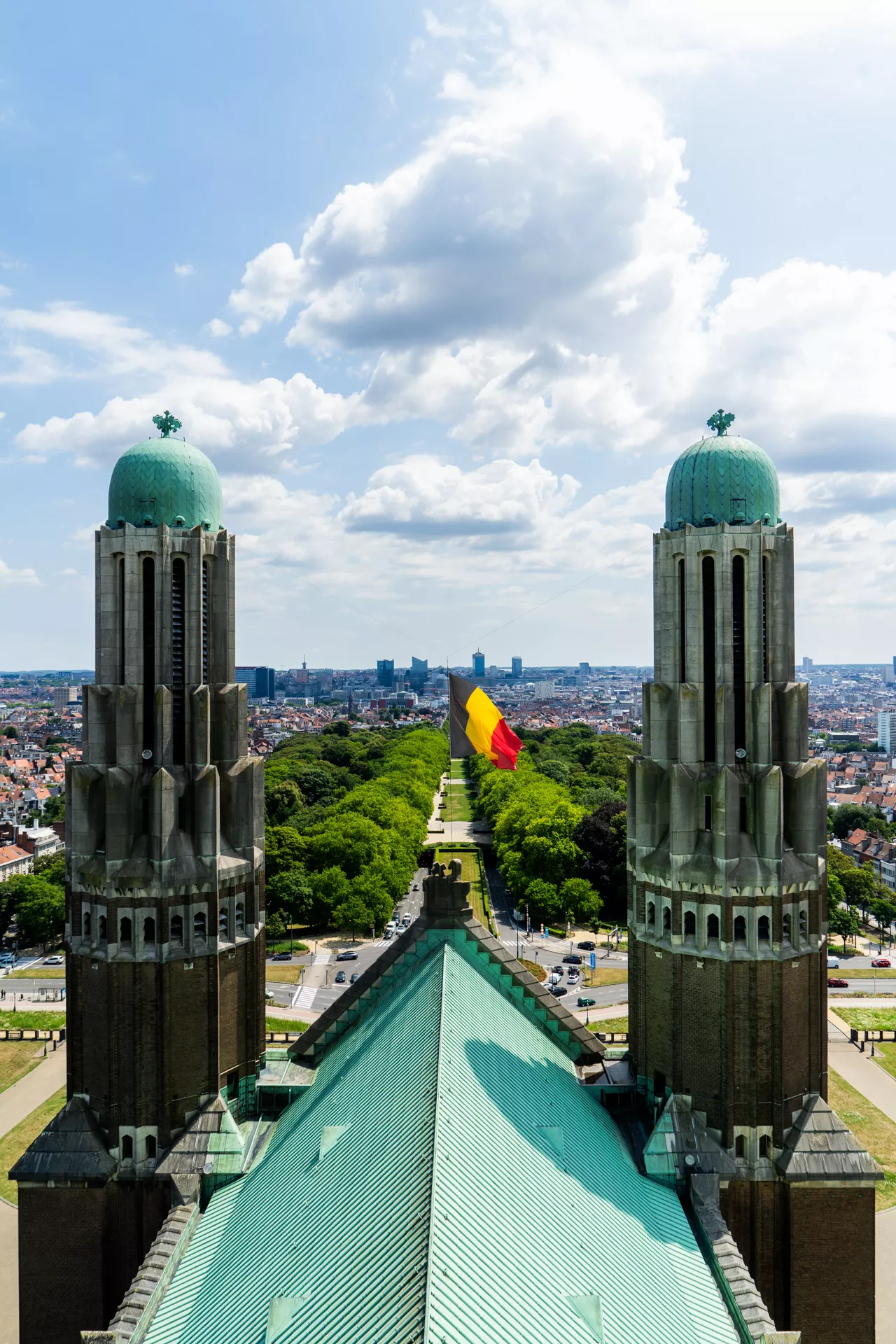
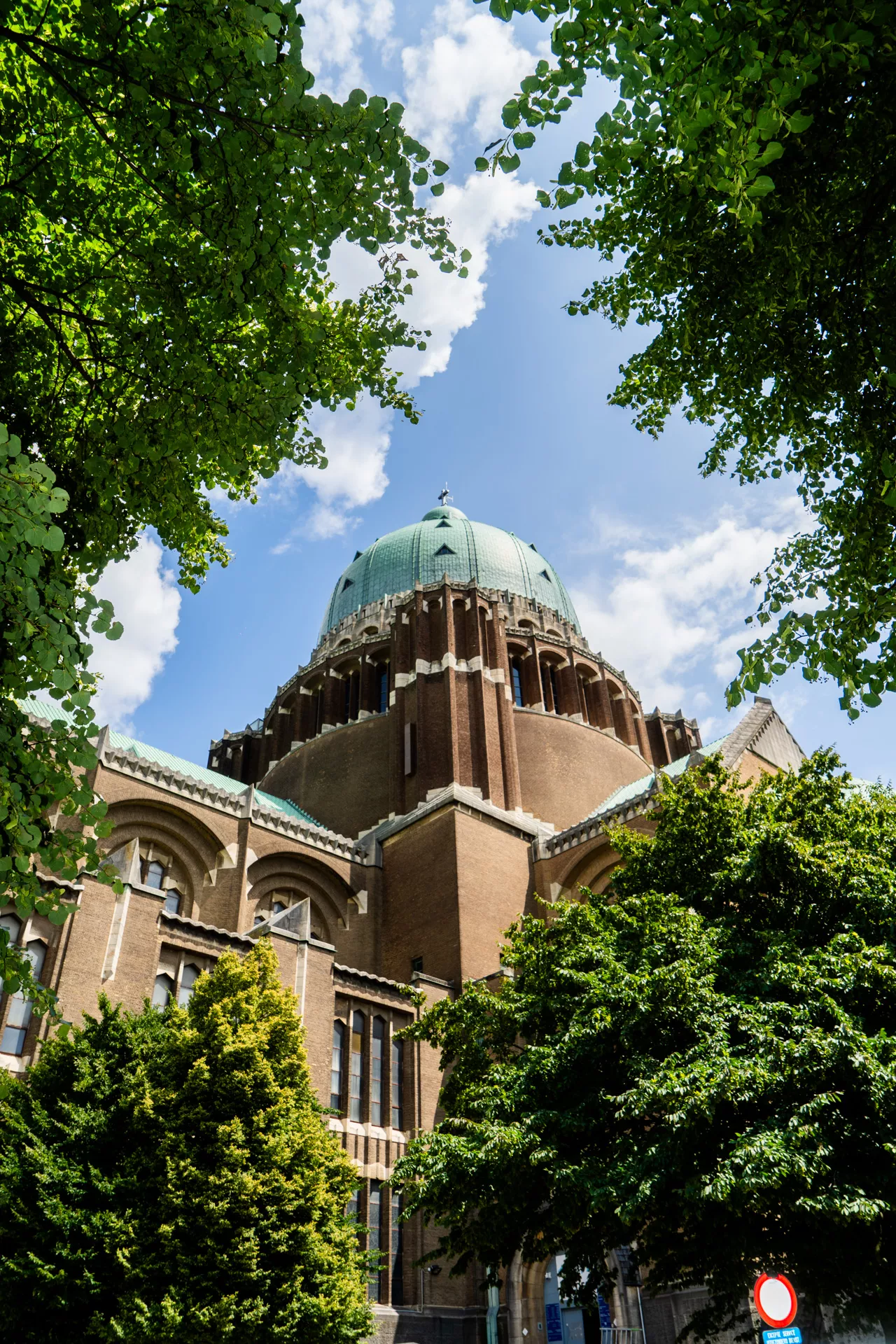
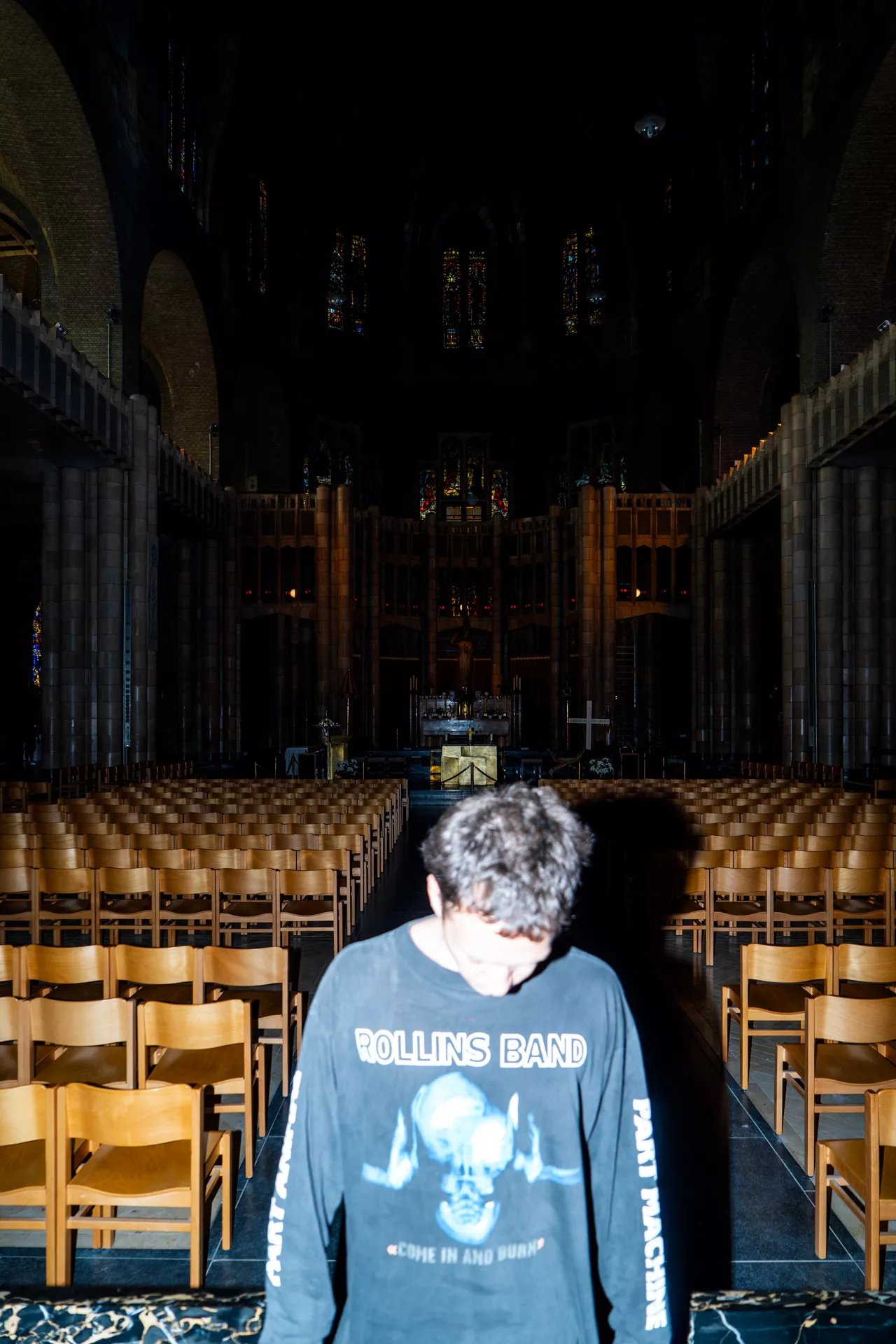
The Basilica of Koekelberg. It’s the most striking location of Listen Festival — a name that resonates. Everyone in Brussels knows the towering structure watching over the city like a sturdy gatekeeper, but who’s ever actually been inside? On Tuesday, November 4, there’s a rare chance to explore the basilica as none other than Loverman will perform live within its walls. That’s the solo project of Anglo-Belgian artist James de Graef, who’s currently hard at work on the follow-up to his debut album — the one that left the Rock Werchter crowd in stunned silence last summer. Behind the Brussels-based musician is also a lover of electronic music and the night. We meet just after James' first-ever visit to the basilica, strolling together toward the city center.


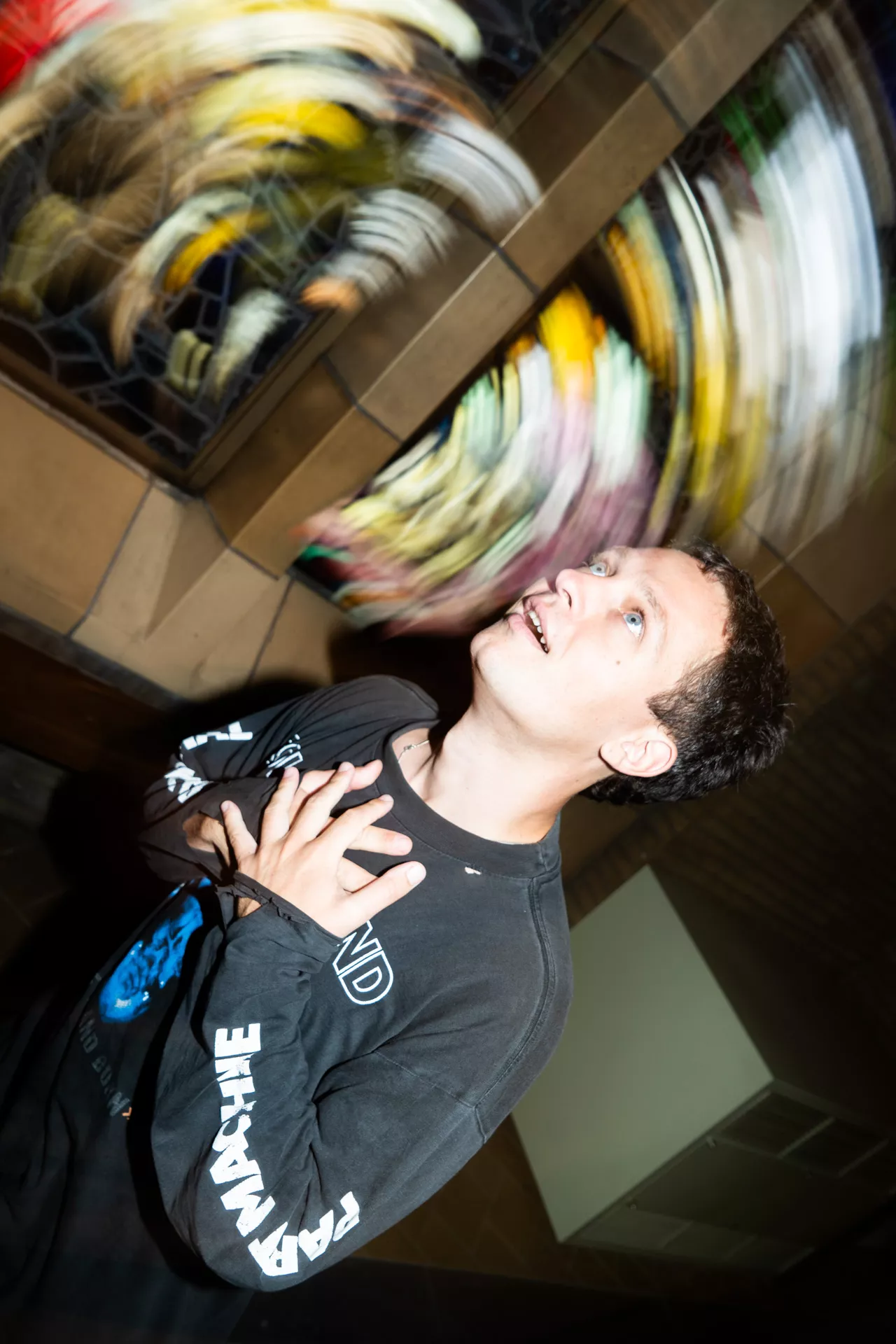

James, now that you've been there, how does it feel knowing you’ll be performing there soon?
I have to say, it definitely made me even more excited. I’ve played in quite a few churches over the past two years, probably around twenty or so. So the novelty of performing in churches has worn off a bit. But this one feels different. It’s by far the most “church-like” church I’ve played in.
You used to live in antikraak squats. Could you imagine living in a place like the basilica?
Wow, I don’t think so. It feels cold and not exactly cozy. Though, I have to admit, it would be amazing to live there for a little while, like a month or two. Just to exist in that space, and especially to make music there. If I could work undisturbed in the basilica for a couple of months, I’d really love that. Especially if the organ’s still there.
In a previous interview, you mentioned—quoting David Byrne—that space really shapes how music sounds. How does that idea play out in a church or specifically in the basilica?
When I play in a church, it’s like with any concert: if there’s focus, intimacy, and a kind of intensity in the energy, it all amplifies itself. It becomes a sort of feedback loop. And the church, just like David Byrne explained so well, completely influences the kind of music you make. It’s also an instrument. Music is always the meeting point of two elements: the space and the sound source.
In my small apartment, I struggle a bit. I often want to play piano, but finding a good one that works in an apartment isn’t easy. A small space can only handle so much. But if you have a large room and you can play piano in it, you’ll never play the same way, it just sounds completely different.


Did you have any connection to the Basilica of Koekelberg before the concert came into the picture?
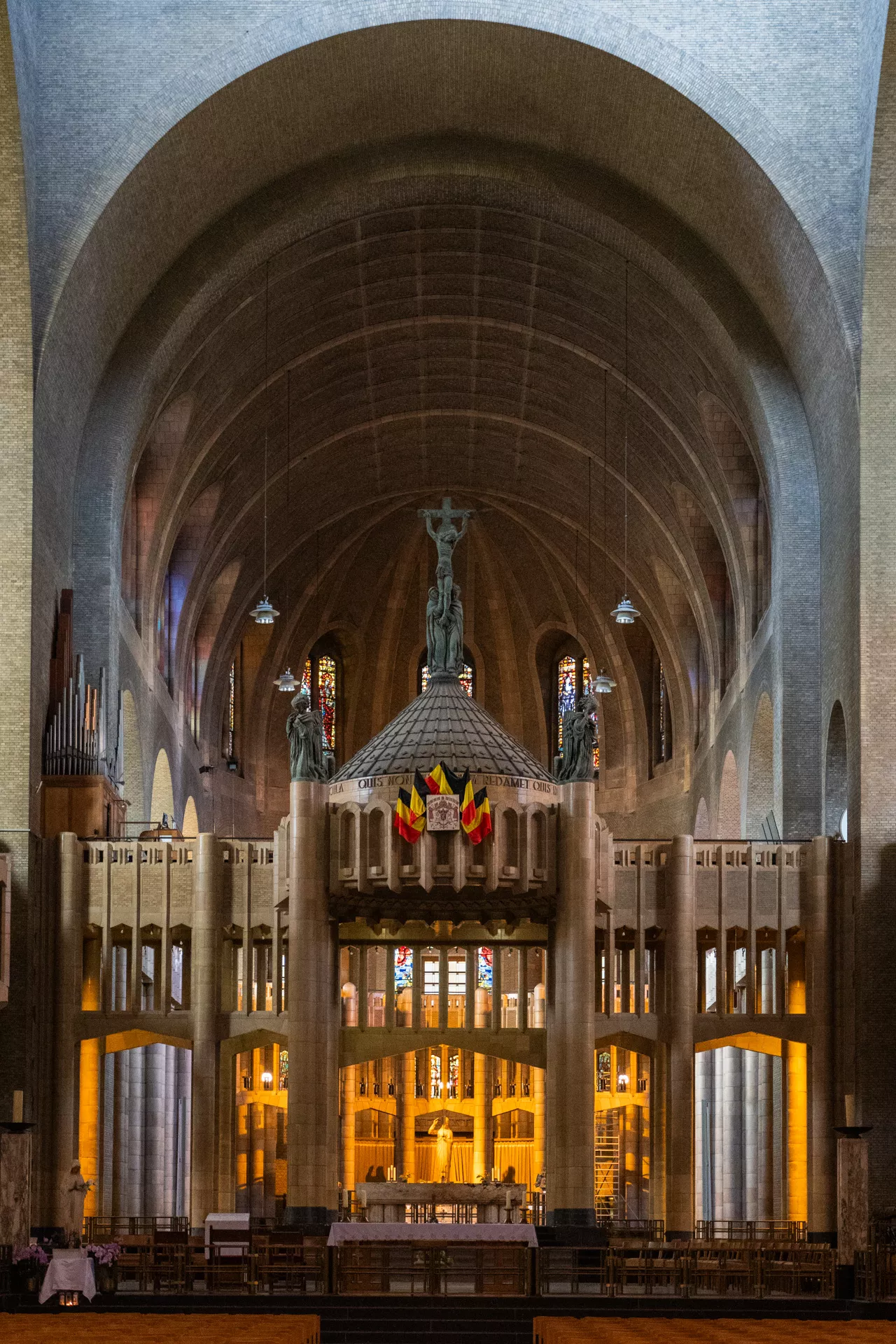
I’ve always found it an intriguing space. In general, I really like spending time in churches and by extension, basilicas. But I’d never actually gotten around to visiting it. You pass by it so often driving in or out of the city. And once you step inside, it’s surreal. You’re like, “Jesus Christ, this is phenomenal”. The scale of everything is just completely different. What looks like a short distance inside turns out to be much farther than you thought.
You’re living in Anderlecht now. Was Brussels the city you needed to grow — both as a person and as an artist?
Yeah, it really was. This is where I needed to be. I had lived in Ghent for six years before, for my studies. But I never quite found my footing there. It wasn’t bad, but when I arrived here, I suddenly felt this urge to really be part of a place. A lot of my friends were already here — old friends from Leuven, like the people from Slagwerk, for example. Those were the people I used to hang out with a lot.
Did you also feel a need for the scale or urban intensity of a city like Brussels?
I really appreciated being able to just exist here, completely anonymous. Brussels is an exciting city. There’s so much going on. It keeps me curious and engaged, and it definitely inspires me. People here approach art in a way that really moves me.
Take a place like Kiosk Radio, for example, where I started a monthly residency a while ago. That project constantly sparks a kind of ongoing discourse, a fascinating dialogue about the medium of the DJ set, what it means to create collages of music and blend sounds, and how that influences the way we make music. I find that super interesting.
Can you give a concrete example of what you mean?
It’s about intertextuality. I like working with quotes and paying homage to music I respect, in whatever form that takes, whether it’s an art piece, a performance, a text, anything really. I want to mix that with contemporary ways of experiencing and making music.
I studied music, I can play instruments, but I also want to do something modern and relevant with that. That’s the tension I’m navigating. The culture of playing instruments as taught in conservatories doesn’t feel like the place where new music is emerging for me anymore. That’s happening more on computers now. People no longer need to know how to play an instrument to tell their story. That really draws me in.
What I find exciting is bringing together the tradition I still somewhat hold up—coming from a background of performing and entertaining in bands, doing a lot of jazz and classical, kind of a mixed bag—and blending that with a newer, more thrilling world.



In a De Standaard interview, you spoke about the glorification of the rock’n’roll, self-destructive lifestyle that often surrounds famous musicians. You also mentioned how the silence of lockdown led you to introspection and facing your demons. I’m curious, how do you relate to the night?
Before I moved to Brussels, I was pretty much a recluse. I was always at home studying and working hard. The only times I really went out were to play with my bands. But once I got to Brussels, I was suddenly exposed to a nightlife culture I’d been sheltered from before. I’d always been into electronic music —ever since the dubstep scene in Leuven— but in the big city, a whole new world opened up, and I started pushing boundaries. It felt like a release from the straightjacket I’d worn before, the one that says you have to go to bed on time and stay focused. Suddenly I realized I could stay up all night, with everything that comes with it, the highs and the hangovers. It was thrilling, and I felt I had to explore that. So for about two or three years, I dove deep into that world, partying hard with a lot of friends.
There was something spiritual in it for me too. I felt this urge to break free. Until the well ran dry. At some point, I realized the night wasn’t inspiring or feeding me anymore, it was draining me. And that’s when I knew a chapter was more or less closed.
These days, I actually really enjoy having a steady rhythm. I’m working hard now, especially on my album. Sleep is so important. It feels sacred. And sometimes it’s also sacred to completely go beyond the edge, but it has to be in balance. That’s something I’m learning to respect more now.
So no more all or nothing?
I want to choose more consciously now, not just be at the mercy of certain temptations you can’t resist. It’s essential to celebrate, to stay open, and not act out of fear but from a place of love.
After heartbreak was the central theme of your debut album a few years ago, is this the thread running through your upcoming record?
I think so, yeah. I’m in the process of digging deeper into the source of my sadness or suffering. That might sound heavy, but that’s more or less what it is. There’s an existential call there, and I want to explore it further, to reach a place of meaning. In that sense, a church is kind of the perfect setting for my music. (laughs)
What will you bring to Listen Festival?
Something intimate. And also something collective, because it’s such a vast space. Something intimate within that grandeur.
That’s beautiful — thank you!